
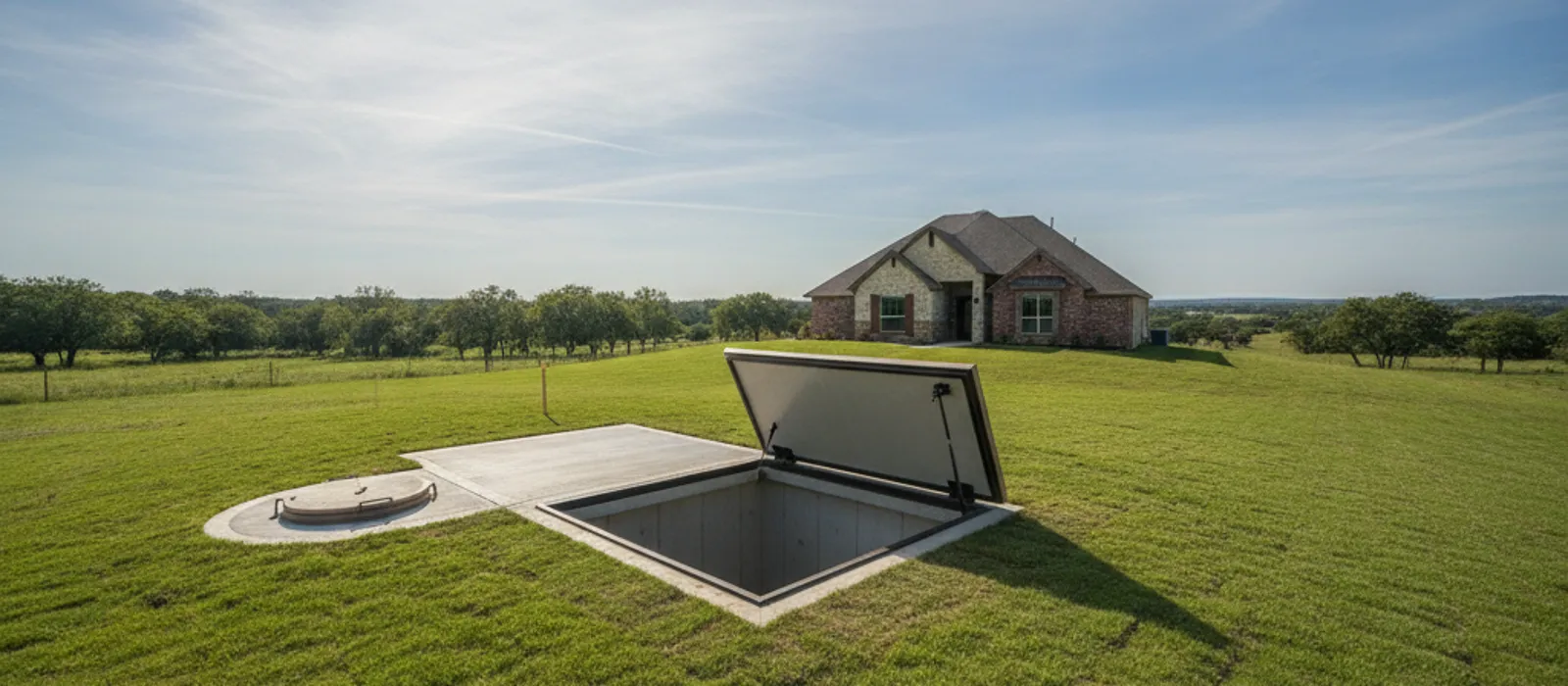
Every year, North Texas residents face the very real threat of severe weather, including devastating tornadoes that can strike with little warning. Protecting your family and property isn’t just a recommendation; it’s a critical safety measure in our region. For homeowners and businesses in cities like Gainesville, Callisburg, and Lindsay, understanding Cooke County storm shelter rules is essential to ensure your chosen safe room provides the robust protection it promises.
While Texas does not enforce a statewide building code specifically for storm shelters, local jurisdictions and national standards guide safe construction. Navigating these requirements can seem complex, but ensuring your storm shelter meets established safety criteria is paramount for life protection. Texoma Storm Shelters is here to clarify these standards, offering practical, expert guidance for residents across Grayson, Fannin, and Cooke counties.
The Unpredictable Fury of North Texas Weather and Why Regulations Matter
North Texas lies squarely within “Tornado Alley,” a region where atmospheric conditions frequently combine to produce powerful and destructive tornadoes. The memory of recent severe weather events, even outside of Cooke County, serves as a stark reminder of our vulnerability. Tornadoes can level homes, businesses, and infrastructure in minutes, leaving communities reeling. In such dire circumstances, a properly constructed storm shelter can be the difference between life and tragedy.
The purpose of storm shelter regulations, even when adopted at a local level or through national standards, is to ensure these critical structures are built to withstand the extreme forces of a tornado. Without adherence to specific design, material, and installation guidelines, a shelter might offer a false sense of security. These standards ensure the shelter can resist high winds, flying debris, and structural loads, protecting occupants from the most dangerous aspects of severe weather. Ignoring these critical details is a gamble no one in our tornado-prone area should take.
Deciphering Cooke County Storm Shelter Rules and State Guidelines
When considering a storm shelter in Cooke County, it’s important to understand the regulatory landscape. Unlike some states that have overarching storm shelter codes, Texas typically delegates building code enforcement to individual cities and counties. This means while there isn’t a single “Cooke County storm shelter rulebook” dictating every detail, the cities within Cooke County often adopt or reference national model building codes and specific safe room standards.
Most notably, these local ordinances, if they exist, will point to the Federal Emergency Management Agency (FEMA) publications and the International Code Council (ICC) standards. These are the authoritative benchmarks for storm shelter and safe room construction nationwide. A reputable storm shelter installer in Cooke County will always build to these proven standards, regardless of specific local mandates, because they represent the minimum requirements for truly life-saving protection. This proactive approach ensures your shelter offers the highest level of safety.
For a free, written estimate on a code-compliant storm shelter installation for your Cooke County home or business, contact Texoma Storm Shelters today at (903) 884-7210 or email info@texomatornadoshelters.com. We are licensed and insured, ready to answer your questions and guide you through the process.
FEMA P-320 and ICC-500: The Gold Standard for Safe Room Construction
When we talk about robust, life-saving storm shelters, two documents consistently come to the forefront: FEMA P-320 and ICC-500. These are not just guidelines; they are comprehensive standards developed by experts to ensure safe rooms and storm shelters can truly withstand the forces of an EF-5 tornado. Understanding what these standards entail is crucial for anyone investing in a shelter.
FEMA P-320: Taking Shelter from the Storm
FEMA P-320, officially titled “Taking Shelter from the Storm: Building a Safe Room for Your Home or Small Business,” provides detailed guidance for constructing residential and light commercial safe rooms. This publication outlines specific requirements for design, materials, and construction practices that are proven to resist extreme wind and impact loads. Key elements covered in FEMA P-320 include:
- Structural Design: Requirements for walls, roofs, and foundations to ensure the entire structure remains intact under tornado-force winds.
- Material Strength: Specifications for reinforced concrete, steel, and other materials to prevent failure.
- Anchoring Systems: Detailed instructions for properly anchoring the safe room to its foundation, preventing it from being uplifted or shifted by high winds.
- Impact Resistance: Standards for doors, windows, and vents to withstand impacts from windborne debris, a primary cause of injury during tornadoes.
- Ventilation: Guidance on ensuring adequate airflow while maintaining structural integrity.
Adhering to FEMA P-320 means your shelter is designed to protect occupants during a direct hit from an EF-5 tornado, offering peace of mind that goes beyond basic protection.
ICC-500: Standard for the Design and Construction of Storm Shelters
The International Code Council (ICC) 500 standard, “ICC/NSSA Standard for the Design and Construction of Storm Shelters,” is a more stringent and code-enforceable standard that applies to both residential and commercial storm shelters. It is often referenced by local building codes and adopted by jurisdictions that want to ensure the highest level of protection. ICC-500 incorporates many of the principles found in FEMA P-320 but provides more prescriptive requirements for design, construction, and testing.
Key aspects of ICC-500 include:
- Occupant Capacity: Guidelines for minimum space per occupant, ensuring comfort and safety during an event.
- Environmental Control: Requirements for ventilation, lighting, and sanitation to support occupants for extended periods.
- Accessibility: Provisions for accessibility for people with disabilities, ensuring everyone can safely use the shelter.
- Testing Protocols: Mandates for debris impact testing and pressure testing of shelter components, verifying their ability to withstand tornado forces.
- Emergency Features: Requirements for emergency exits, communication, and fire resistance.
Both FEMA P-320 and ICC-500 serve as the backbone of safe storm shelter construction. When Texoma Storm Shelters installs a safe room, we ensure it meets or exceeds these critical standards. This commitment ensures your shelter is a genuine haven when severe weather threatens. You can learn more about these critical standards by reading our blog posts on [/blog/fema-p-320-storm-shelter-standards/] and [/blog/icc-500-safe-room-requirements/].
Navigating Permitting, Installation, and Inspection in Cooke County
While Cooke County itself might not have a standalone storm shelter permitting department, individual cities within the county often do. For example, if you’re installing a storm shelter in Gainesville, you would need to check with the City of Gainesville’s building department for any local permitting requirements. This is a common practice across North Texas, where cities manage their own building codes and inspection processes.
The Permitting Process
Generally, obtaining a permit for a storm shelter ensures the installation complies with local zoning, setback requirements, and structural safety standards. The process typically involves:
- Application Submission: Submitting a permit application to your city’s building department, often including a site plan and construction drawings.
- Plan Review: City officials review the plans to ensure they meet adopted building codes, which often refer to ICC-500 or FEMA P-320.
- Permit Issuance: Once approved, the permit is issued, allowing construction to begin.
A professional installer like Texoma Storm Shelters will assist you with understanding these local requirements and navigating the permitting process. We stay informed on specific city codes affecting our service area, including cities in Cooke County. For more general information on permits, see our guide on [/blog/storm-shelter-permits-texas/].
Professional Installation and Inspection
Proper installation is as crucial as the design itself. A storm shelter, whether an above-ground safe room or an underground unit, must be correctly anchored to its foundation to prevent it from failing under extreme wind loads. This requires specialized knowledge and equipment. Our team ensures every installation adheres strictly to manufacturer specifications and national safety standards.
During the installation:
- Site Assessment: We evaluate your property for optimal placement, considering soil conditions, utility lines, and accessibility.
- Foundation Preparation: For underground shelters, this involves precise excavation. For above-ground units, it means ensuring a solid, level concrete slab.
- Anchoring: Utilizing engineered anchoring systems that meet FEMA P-320 and ICC-500 requirements, connecting the shelter securely to the foundation.
- Quality Materials: We use only certified, impact-resistant materials for the shelter structure, door, and ventilation system.
Some cities may require inspections at various stages of construction or upon completion to verify compliance. Texoma Storm Shelters coordinates with local inspectors as needed, ensuring every step of your installation meets or exceeds expectations. Our commitment to licensed and insured service guarantees a safe, compliant installation.
Local Case Example: Gainesville Family’s Underground Shelter
In late 2023, a family in Gainesville, Cooke County, decided to install an underground storm shelter beneath their existing garage floor. They contacted Texoma Storm Shelters, concerned about the potential for tornadoes after a close call during a spring storm. Their primary concern was ensuring the shelter met all safety guidelines, especially regarding proper anchoring given their clay soil. After a thorough site assessment, we recommended a reinforced steel underground shelter designed for a family of six. The total cost for the shelter, excavation, and installation, including a new concrete pour for the garage floor, came to approximately $6,200. We assisted the family with checking local Gainesville city permit requirements, which primarily referenced ICC-500 for structural integrity. The installation was completed in two days, providing them with immediate peace of mind and a secure refuge.
Understanding Storm Shelter Costs, Rebates, and Value in the Texoma Region
The investment in a storm shelter is an investment in safety and peace of mind. While the initial cost is a factor, understanding what influences pricing and potential financial assistance can help you make an informed decision. Storm shelter costs vary widely based on type, size, materials, and installation complexity.
Factors Influencing Storm Shelter Cost
Several key elements contribute to the overall price of a storm shelter:
- Type of Shelter: Above-ground safe rooms, underground shelters, and garage floor shelters each have different cost structures. Above-ground units often require less excavation but more robust structural design.
- Size and Capacity: Larger shelters designed for more occupants will naturally cost more due to increased material and labor.
- Materials: Steel, concrete, and composite materials vary in price and offer different levels of protection and durability.
- Features: Add-ons like specialized seating, ventilation systems, lighting, and access ramps can affect the final price.
- Installation Difficulty: Factors such as challenging soil conditions, limited access to the installation site, or the need to cut and repour concrete (for garage floor shelters) can increase labor costs.
Average Cost Breakdown for Common Shelter Types
Here is a general cost breakdown for typical storm shelters installed in the Texoma region, including Cooke County:
| Shelter Type | Average Cost Range | Key Considerations |
|---|