
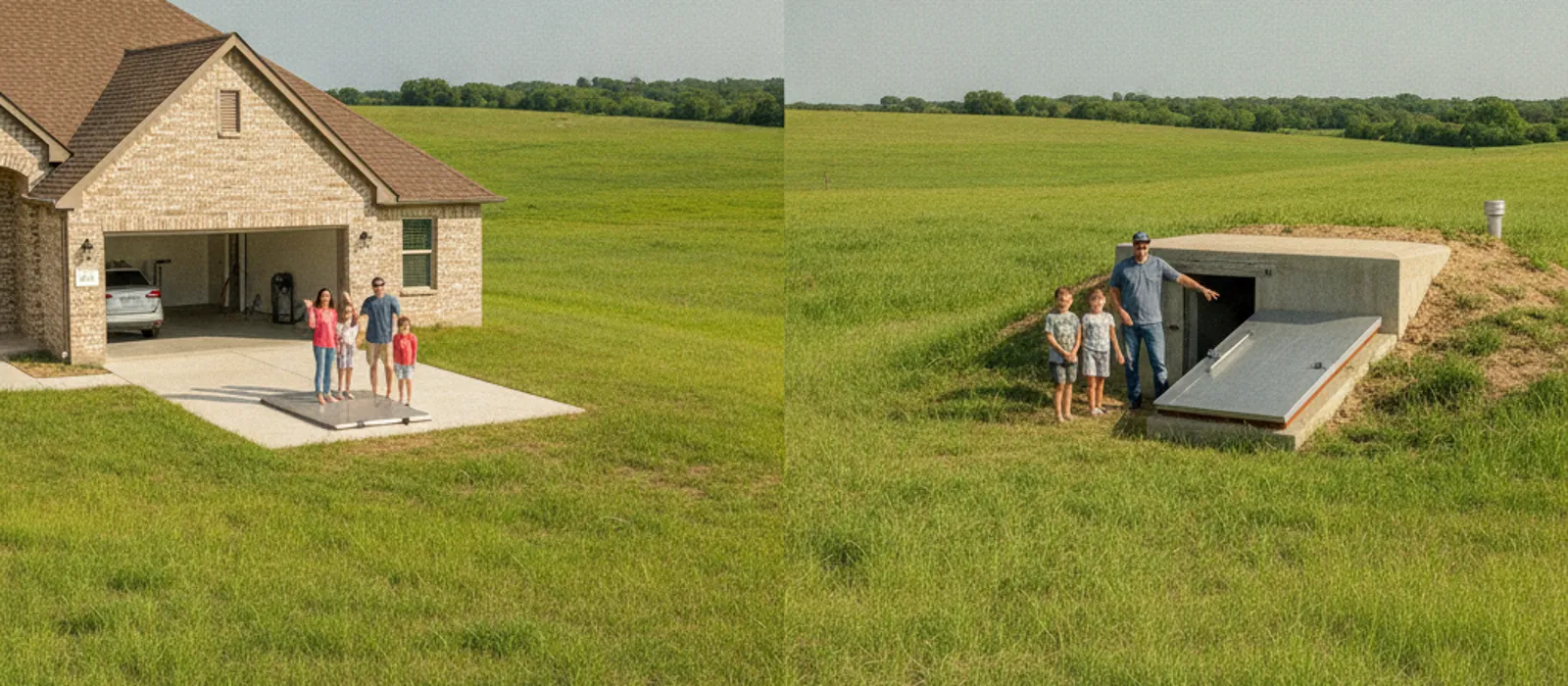
When an EF-3 tornado warning suddenly blares across Grayson County, the immediate thought for many North Texas families turns to safety. Protecting your loved ones from severe weather is a top priority, and choosing the right storm shelter is a critical decision. You might be weighing options like a convenient garage floor shelter against a robust outdoor underground bunker. Understanding the differences between a garage storm shelter vs outdoor bunker is essential for making an informed choice for your home and family.
Texoma Storm Shelters specializes in providing life-saving solutions designed to meet the rigorous standards of FEMA P-320 and ICC-500. We serve homeowners and businesses across Sherman, Texoma, and North Texas, ensuring that when the sirens sound, you have a secure place to go. Let’s explore the distinct advantages and disadvantages of these two popular storm shelter types.
Understanding Garage Floor Storm Shelters
A garage floor storm shelter is an underground unit installed directly beneath your garage floor. It typically features a heavy-duty steel lid that sits flush with the floor, making it nearly invisible when closed. Access is gained by lifting this lid and descending a ladder or steps into the secure space below. These shelters are a popular choice for their discreet placement and easy accessibility.
Design and Installation
Garage floor shelters are designed for quick entry, often within seconds of a tornado warning. The installation process involves cutting a section of your existing garage slab, excavating the earth, placing the pre-fabricated steel or concrete unit, and then pouring a new concrete collar around it. This ensures a stable and secure installation. Our team handles every step, from initial assessment to final inspection, adhering to all local codes and FEMA guidelines. For more detailed information on this type, visit our dedicated page on /garage-floor-shelters/.
Advantages of Garage Floor Shelters
One of the primary benefits of a garage floor shelter is its accessibility. You can reach it quickly without going outside into the storm. This is particularly valuable during torrential rain, hail, or high winds, which often precede or accompany a tornado. The garage also offers a degree of protection from flying debris as you enter the shelter.
Another significant advantage is their discreet nature. When closed, the shelter lid blends seamlessly with your garage floor, preserving yard space and aesthetics. This makes them ideal for homes with limited outdoor space or those who prefer an unobtrusive safety solution. Furthermore, the stable temperature inside a garage often means the shelter itself stays cooler in summer and warmer in winter than an outdoor unit might.
Considerations for Garage Floor Shelters
While highly convenient, garage floor shelters do have some considerations. They require sufficient space within your garage to allow for lid access and movement around your vehicles. The installation process is more complex than some above-ground options, involving concrete work and excavation. This can sometimes translate to a slightly higher initial installation cost compared to a basic outdoor bunker, depending on specific site conditions. Additionally, if your garage floods, water could potentially enter the shelter if the lid is not perfectly sealed or if there’s extensive water accumulation.
Exploring Outdoor Underground Bunkers
Outdoor underground bunkers, sometimes called backyard shelters, are standalone units buried completely underground in your yard. These shelters are accessed via an exterior door and a set of stairs leading down into the protective space. They are typically constructed from steel or concrete and offer robust protection against extreme weather events, including direct tornado strikes.
Design and Installation
The installation of an outdoor bunker involves significant excavation in your yard. A large pit is dug, the pre-fabricated shelter unit is lowered into place, and then backfilled with earth. The entrance typically includes a sloped walkway or stairs and a sturdy, often slanted, steel door designed to withstand debris impact. These shelters are engineered to provide maximum protection by leveraging the insulating and protective properties of the earth. For a comprehensive look at these options, please see our /underground-storm-shelters/ page.
Advantages of Outdoor Bunkers
Outdoor bunkers offer unparalleled protection. Being completely subterranean, they are shielded by several feet of earth, providing excellent insulation against wind, debris, and sound. This depth offers a psychological sense of security as well. They can often be larger than garage shelters, accommodating more people or allowing for more storage of emergency supplies. Since they are outside, they don’t impact your garage space or vehicle parking.
For homeowners with specific site requirements or who prefer a designated, separate structure for their storm safety, an outdoor bunker is an excellent choice. They are also less susceptible to potential garage flooding issues, as their entrances are typically designed with drainage in mind and positioned away from the house foundation.
Considerations for Outdoor Bunkers
The main drawback of an outdoor bunker is its external location. During severe weather, you must go outside to reach it, exposing yourself to rain, hail, and flying debris. This can be particularly challenging for elderly individuals, young children, or those with mobility issues. The path to the shelter must also be kept clear of obstructions.
Aesthetics can also be a concern. While the majority of the bunker is underground, the entrance structure is visible in your yard and requires landscaping to integrate it seamlessly. Installation also requires significant yard disruption and can be more weather-dependent than an indoor installation.
Garage Storm Shelter vs Outdoor Bunker: Key Considerations
Choosing between a garage storm shelter and an outdoor bunker involves weighing several practical factors specific to your property and lifestyle. Each type offers a different set of trade-offs that homeowners in Texoma and North Texas should carefully consider.
Accessibility and Speed of Entry
This is often the most critical differentiator. A garage floor shelter allows direct access from inside your home, which means no exposure to the elements during a tornado warning. This can save crucial seconds when every moment counts. Imagine trying to navigate a dark, rain-slicked yard with hailstones falling, all while the tornado sirens blare. In contrast, an outdoor bunker requires you to venture outside. While the path to the shelter can be paved and well-lit, the exposure to severe weather, especially high winds and flying debris, is a significant concern for many families. For individuals with limited mobility, or families with young children, the indoor access of a garage shelter often proves more practical and safer.
Space and Footprint
Garage shelters are designed to be unobtrusive, with their lids flush with the garage floor. They don’t take up any usable space once closed, allowing you to park your vehicles or use your garage as normal. This is a huge benefit for homeowners who value their yard space or have smaller lots. Outdoor bunkers, while mostly underground, do have a visible entrance structure. This requires a dedicated footprint in your yard, which must be factored into landscaping and property use. If you have a large yard and prefer to keep your garage clear, an outdoor bunker might be a better fit. However, if yard space is at a premium, a garage shelter maintains aesthetic and functional integrity.
Installation Process and Site Impact
Installing a garage floor shelter involves cutting and replacing a section of your concrete garage slab. This is typically a relatively clean process, largely contained within the garage. The primary disruption is the temporary inability to use that section of your garage. Outdoor bunkers, on the other hand, require extensive excavation in your yard. This means heavy machinery, significant dirt removal, and potential disruption to landscaping, irrigation systems, or underground utilities. While our team takes every precaution, the impact on your yard is generally more substantial and longer-lasting until landscaping can be restored.
Long-Term Maintenance and Durability
Both types of shelters are built to last and require minimal maintenance. Garage shelters may need occasional lubrication of hinges and seals, and the interior should be cleaned periodically. The primary concern is ensuring the lid mechanism remains functional and free of obstructions. Outdoor bunkers also need regular checks of their entry door and seals. Additionally, external drainage around the entrance should be kept clear to prevent water accumulation. Both types benefit from routine inspections to ensure structural integrity and readiness for severe weather. Regular maintenance helps ensure your shelter is always ready for use. You can learn more about general shelter care in our blog post on /blog/storm-shelter-maintenance-tips/.
Cost, Installation, and Rebates: Garage Storm Shelter vs Outdoor Bunker
Understanding the financial aspects and potential savings is crucial when deciding between a garage storm shelter vs outdoor bunker. While both represent a vital investment in safety, their costs can vary based on size, materials, installation complexity, and local conditions.
Typical Cost Ranges
The cost of installing a storm shelter in North Texas can fluctuate. Generally, a standard residential garage floor storm shelter might range from $5,000 to $8,500. This price typically includes the unit itself, delivery, excavation, concrete work, and professional installation. Factors like the size of the shelter, the thickness of your existing garage slab, and specific site challenges can influence the final price. Outdoor underground bunkers often have a similar or slightly lower starting price point, typically ranging from $4,500 to $8,000. However, the total cost can increase with larger sizes, specialized features, or complex site preparation, such as navigating difficult soil conditions or extensive utility lines. It is always best to get a free, written estimate tailored to your specific property. Learn more about general costs on our /storm-shelter-cost/ page.
Installation Timeline
A typical garage floor storm shelter installation can often be completed within one to three days. This includes cutting the concrete, excavating, setting the unit, and pouring the new concrete collar. The work is largely dependent on weather conditions if outdoor concrete curing is involved, but the core work is usually indoors. Outdoor bunker installations can also range from two to four days. This timeline includes excavation, setting the unit, backfilling, and ensuring proper drainage around the entrance. Weather can play a more significant role in outdoor installations, as heavy rain can delay excavation or backfilling.
Rebates and Financial Assistance
Homeowners in North Texas should actively inquire about available rebates and financial assistance programs. Grayson County, for example, has historically offered storm shelter rebate programs to encourage residents to install safe rooms. These programs often provide a partial reimbursement for the cost of a FEMA P-320 compliant storm shelter, which can significantly reduce your out-of-pocket expense. We help guide our clients through the application process for these rebates, providing necessary documentation and ensuring your chosen shelter meets the program’s requirements. These rebates are not always available, so it’s important to check current program status with local authorities or contact us for the latest information. For specific details on local programs, refer to our guide on /blog/grayson-county-storm-shelter-rebate/.
Texoma Storm Shelters offers free written estimates for all our services. We believe in transparent pricing and will clearly outline all costs involved, helping you understand your investment in life-saving protection. Don’t hesitate to reach out to us at (903) 884-7210 or email info@texomatornadoshelters.com to discuss your options and get a detailed quote.
Local Case Examples in Texoma
Understanding how these shelter types have been implemented in our local communities can provide valuable insight. Here are a few realistic scenarios from North Texas, showcasing the practical application and costs involved.
Sherman Family Chooses Garage Safety
A family in Sherman, living near Highway 75 and facing frequent severe weather threats, decided on a garage floor storm shelter. Their primary concern was quick access for their young children and an elderly parent without exposing them to the elements. Our team installed a 4x6 foot steel garage shelter, accommodating 6-8 people, for $6,200. The installation took two days, with minimal disruption to their daily routine. This investment provided them with peace of mind, knowing they could reach safety within seconds during a sudden tornado warning, a common occurrence in our area, especially during spring storm season.
Denison Homeowner Opts for Outdoor Protection
Down in Denison, a homeowner with a large backyard and a preference for keeping his garage clear chose an outdoor underground bunker. He selected a 6x8 foot unit, designed for up to 12 people, for $7,500. The installation required three days of work, including careful excavation to avoid existing irrigation lines. This bunker offers robust protection and ample space for his extended family and emergency supplies. During a recent severe thunderstorm that produced damaging winds near Lake Texoma, he and his family safely weathered the storm in their secure underground haven.
Van Alstyne Resident Secures Rebate Savings
In Van Alstyne, a retired couple decided to install a compact 4x4 foot garage floor shelter for their small family. The initial cost was $5,800. Fortunately, they qualified for a Grayson County storm shelter rebate program, which provided a $3,000 reimbursement. This significantly reduced their out-of-pocket expense to $2,800, making advanced tornado protection much more accessible. They emphasized the ease of access from their kitchen directly into the garage as a major factor in their decision, especially given the unpredictable nature of North Texas storms that can develop rapidly.
Comparison Table: Garage Floor Storm Shelter vs. Outdoor Bunker
To help visualize the key differences, here’s a direct comparison of the two storm shelter types:
| Feature | Garage Floor Storm Shelter | Outdoor Underground Bunker |
|---|---|---|
| Accessibility | Excellent; direct access from inside garage, no outdoor exposure. | Good; requires going outside, exposing occupants to elements. |
| Space Impact | Discreet; lid flush with floor, preserves garage space. | Requires dedicated yard space for entrance structure. |
| Installation Time | 1-3 days (less weather-dependent). | 2-4 days (more weather-dependent, extensive excavation). |
| Typical Cost Range | $5,000 - $8,500 (unit & installation). | $4,500 - $8,000 (unit & installation). |
| Debris Protection | Excellent; protected by garage structure and earth. | Superior; protected by several feet of earth. |
| Aesthetics | Nearly invisible when closed; preserves property aesthetics. | Visible entrance structure requires landscaping integration. |
| Mobility Concerns | Ideal for those with mobility challenges or young children. | May be challenging for those with mobility issues during severe weather. |
| Rebate Eligibility | Often eligible for local and state rebate programs. | Often eligible for local and state rebate programs. |
Making the Right Choice for Your North Texas Home
Deciding between a garage floor storm shelter and an outdoor bunker ultimately depends on your specific needs, property layout, and personal preferences. Both options provide robust, life-saving protection against severe weather, adhering to the critical standards set by FEMA P-320 and ICC-500.
If immediate, indoor access is paramount for your family, especially considering young children, elderly family members, or those with mobility concerns, a garage floor storm shelter offers unmatched convenience and safety from the elements. It also preserves your outdoor living space, making it a popular choice for many urban and suburban homes in areas like Sherman or Pottsboro.
Conversely, if you have ample yard space, prioritize maximum earth-shielded protection, and don’t mind stepping outside during a storm, an outdoor underground bunker might be the ideal fit. These units often provide more interior space and are an excellent choice for properties with specific landscaping or aesthetic preferences that preclude an in-garage installation.
At Texoma Storm Shelters, we are committed to providing practical, straightforward guidance to help you make the best decision. Our expertise as a licensed and insured life-safety expert means you receive accurate, reliable information and a professional installation. We understand the unique weather challenges faced by residents in Grayson, Fannin, and Cooke counties.
To explore your options further or to schedule a free, no-obligation written estimate, contact us today. You can call us directly at (903) 884-7210 or send an email to info@texomatornadoshelters.com. We are here to ensure your family has the ultimate protection when severe weather strikes. Don’t wait until the next tornado warning; secure your peace of mind now. You can also explore more about what makes a shelter safe by reading our post on /blog/fema-p-320-storm-shelter-standards/.
Frequently Asked Questions
### How long does installation typically take for each type of storm shelter?
A garage floor storm shelter can usually be installed within one to three days, as the work primarily involves precise concrete cutting and replacement within the garage. Outdoor underground bunkers often require two to four days for installation, due to more extensive excavation, unit placement, and backfilling in your yard, which can also be more affected by weather conditions.
### Are there size limitations for garage floor shelters?
Garage floor shelters come in various standard sizes, typically ranging from 4x4 feet to 6x8 feet, accommodating 4-12 people. The main limitation is the available clear space within your garage to allow for the shelter’s footprint and adequate room to open the lid. Custom sizes are less common for garage floor units due to manufacturing and installation complexities, but we can assess your specific needs during a free estimate.
### What kind of maintenance do these storm shelters require?
Both garage floor and outdoor underground shelters require minimal but important maintenance. This includes periodically checking and lubricating hinges and seals, ensuring the lid or door operates smoothly, and keeping the interior clean and free of debris. For outdoor bunkers, it is also crucial to ensure proper drainage around the entrance to prevent water accumulation. Regular inspections help ensure your shelter remains ready for use.
### Can I get a rebate for either a garage floor or an outdoor bunker in Grayson County?
Yes, both garage floor and outdoor underground storm shelters are often eligible for local rebate programs in Grayson County, provided they meet specific FEMA P-320 or ICC-500 compliance standards. These programs, when available, aim to offset a portion of the installation cost. It is important to check with the county or contact us directly for the most current information on rebate availability and application requirements, as programs can change. You can also visit the official FEMA website for general information on safe room guidelines at https://www.fema.gov.