
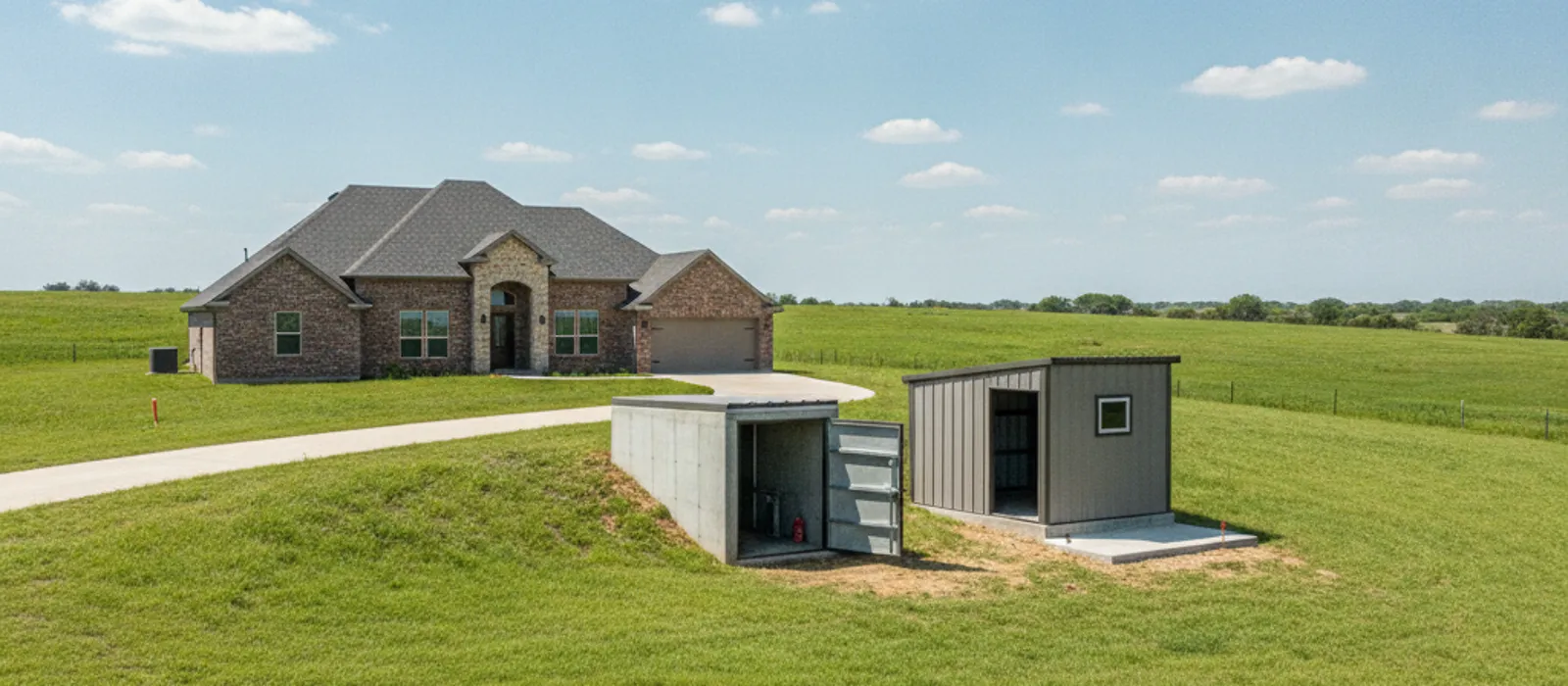
When severe weather threatens North Texas, a reliable storm shelter can be the difference between safety and severe danger. Every year, our region experiences significant tornado activity, making robust protection a necessity, not a luxury. But how do you know if a storm shelter truly offers the protection it claims? The answer lies in understanding standards like FEMA P-320.
This comprehensive guide will explain what FEMA P-320 entails, why it is critical for anyone considering a residential storm shelter, and how these guidelines ensure your family’s safety against the most violent storms. Texoma Storm Shelters is committed to providing installations that meet or exceed these vital benchmarks, giving you peace of mind when it matters most. For a free written estimate on a compliant storm shelter, call us at (903) 884-7210 or visit our contact page.
What is FEMA P-320: Your Shield Against North Texas Storms
FEMA P-320, officially titled “Taking Shelter from the Storm: Building a Safe Room for Your Home or Small Business,” is a comprehensive publication developed by the Federal Emergency Management Agency (FEMA). It provides detailed guidance for designing and constructing safe rooms and storm shelters capable of resisting extreme wind events, including tornadoes and hurricanes. This standard is not a building code itself, but rather a best practice guide that many local codes and rebate programs reference.
For residents in Sherman, Denison, and throughout Grayson, Fannin, and Cooke counties, understanding FEMA P-320 is paramount. It outlines the minimum performance criteria for residential safe rooms, ensuring they can withstand forces from EF5 tornadoes with wind speeds up to 250 mph. These guidelines cover everything from structural integrity and anchorage to missile impact resistance and ventilation, making a FEMA P-320 storm shelter a true fortress against nature’s fury.
Why Adhering to FEMA P-320 Standards Matters for Your Family’s Safety
Choosing a storm shelter is a significant decision, directly impacting the safety of your loved ones. Adhering to FEMA P-320 standards removes guesswork and provides objective criteria for evaluating a shelter’s effectiveness. Without these guidelines, a shelter might look sturdy but fail catastrophically under the intense pressures of a tornado.
The standards outlined in FEMA P-320 are based on extensive engineering research and real-world tornado damage assessments. They ensure that a shelter is not just a reinforced room but a specifically engineered structure designed to protect occupants from crushing forces, flying debris, and extreme pressure changes. This level of meticulous design and construction is essential in areas like North Texas, where severe weather is a consistent threat.
Protection Against Extreme Wind Events
Tornadoes generate incredible wind speeds and create complex aerodynamic forces. A non-compliant shelter might only withstand moderate winds, leaving occupants vulnerable during a powerful EF3, EF4, or even an EF5 tornado. FEMA P-320 specifies designs that account for these extreme forces, including uplift, shear, and overturning.
Resistance to Wind-Borne Debris
One of the greatest dangers during a tornado is flying debris. Common household items like 2x4 lumber can become deadly projectiles traveling at over 100 mph. FEMA P-320 safe rooms are specifically tested to resist the impact of these high-velocity missiles. This testing ensures the walls, doors, and connection points can withstand direct hits without compromising the integrity of the shelter.
Structural Integrity and Anchorage
A storm shelter is only as strong as its weakest link. FEMA P-320 provides rigorous requirements for how a shelter must be anchored to its foundation and how its components are connected. Proper anchorage prevents the entire structure from being lifted or shifted by immense wind forces, a common failure point for poorly constructed buildings during tornadoes. These precise guidelines ensure that your safe room remains securely in place, even when everything around it is being torn apart.
Key Design and Construction Requirements of a FEMA P-320 Storm Shelter
Building a FEMA P-320 compliant storm shelter involves specific design and construction considerations far beyond typical residential construction. These requirements are meticulously detailed to ensure maximum protection.
Robust Wall and Ceiling Construction
FEMA P-320 mandates specific materials and construction methods for walls and ceilings. This often includes reinforced concrete, solid steel plates, or specialized masonry units. The thickness and strength of these materials are calculated to resist both direct wind pressure and the impact of wind-borne debris. For example, walls typically need to be at least 8 inches of concrete or equivalent, with steel reinforcement.
Impact-Resistant Doors and Connections
The door is often a critical vulnerability in any safe room. FEMA P-320 requires doors that are just as strong as the walls, capable of withstanding missile impacts and extreme pressure. These doors must be securely anchored with multiple heavy-duty bolts and hinges. The connections between the door frame and the wall structure are also specified to prevent separation under extreme loads. Many compliant doors are solid steel plate designs.
Adequate Ventilation
While protection is paramount, occupants also need a safe, breathable environment. FEMA P-320 addresses ventilation requirements to ensure sufficient airflow for the number of occupants over an extended period. This often involves passive vents designed to prevent water intrusion and resist debris, or specialized mechanical ventilation systems. The goal is to prevent suffocation or discomfort while maintaining structural integrity.
Proper Anchorage to the Foundation
Perhaps one of the most crucial elements, the anchorage system prevents the entire shelter from being uplifted or shifted. FEMA P-320 provides detailed specifications for anchor bolts, their embedment depth, and spacing, ensuring the shelter is firmly tied into a reinforced concrete foundation. This is especially important for above-ground safe rooms.
Understanding the ICC 500 Standard
It is important to note that FEMA P-320 references and works in conjunction with the ICC 500 standard. The International Code Council (ICC) 500, “Standard for the Design and Construction of Storm Shelters,” is a national standard that provides minimum design and construction requirements for storm shelters. While FEMA P-320 offers guidance specifically for residential and small business safe rooms, ICC 500 is the full engineering standard that designers and manufacturers adhere to. A shelter that is compliant with ICC 500 will also meet the spirit and intent of FEMA P-320 guidelines. Texoma Storm Shelters ensures all installations meet or exceed these rigorous standards. You can learn more about specific requirements by visiting our page on ICC 500 safe room requirements.
Understanding Missile Impact and Wind Load Testing
The effectiveness of a storm shelter is not just theoretical; it is proven through rigorous testing. FEMA P-320 and ICC 500 compliance relies heavily on demonstrating a shelter’s ability to withstand specific forces.
Projectile Impact Testing
This testing simulates the impact of wind-borne debris during a tornado. A common test involves firing a 15-pound 2x4 lumber at specified speeds (typically around 100 mph) at different parts of the shelter, including walls, doors, and vents. For instance, a shelter might need to withstand impacts from a 2x4 traveling at 250 feet per second. The shelter must remain structurally sound, without penetration or significant damage that would compromise safety. This testing ensures that common objects turned into projectiles by tornado winds will not breach the shelter’s protective envelope.
Wind Pressure and Load Testing
Beyond direct impacts, tornadoes create immense wind pressures that can push and pull on a structure with incredible force. Wind load testing ensures that the shelter’s design can handle these pressures without buckling or failing. This includes testing for uplift forces (trying to lift the shelter off its foundation), shear forces (trying to slide it horizontally), and overturning moments (trying to tip it over). These tests are based on the maximum wind speeds of an EF5 tornado, ensuring protection even in the most severe events.
The Role of an Engineer
For any custom or commercial safe room, and even many residential designs, a licensed professional engineer plays a crucial role in ensuring compliance. They review designs, calculate structural loads, and verify that materials and construction methods meet FEMA P-320 and ICC 500 standards. This expert oversight is a cornerstone of guaranteeing a safe and effective shelter.
Choosing the Right FEMA P-320 Compliant Shelter for Your Home
Selecting the ideal storm shelter depends on your specific needs, property layout, and budget. Texoma Storm Shelters offers a range of FEMA P-320 compliant options tailored for North Texas homes.
Above-Ground Safe Rooms
These shelters are installed inside an existing structure, often in a garage or a dedicated room. They offer immediate, easy access and are ideal for individuals with mobility concerns. Our above-ground safe rooms are constructed from heavy-gauge steel, securely anchored to your concrete slab, and feature multi-point locking doors. They provide excellent protection and are a popular choice for many homeowners in areas like Van Alstyne.
Underground Storm Shelters
Installed beneath the ground, these shelters are typically accessed via stairs or a ladder. They offer superior protection from flying debris and often have a stable internal temperature. Our underground storm shelters are made from reinforced concrete or steel, designed to withstand crushing forces and prevent water intrusion. They are a classic choice for maximum protection and are common in rural areas around Pottsboro.
Garage Floor Shelters
A popular choice for convenience, these shelters are installed flush with your garage floor, typically covered by a lid that can be driven over. They are discreet and provide quick access during a storm. Our garage floor shelters feature heavy-duty steel construction, gas-assist lifts for easy opening, and robust anchoring systems. They are a practical solution for many families in communities like Whitesboro.
Local Case Example: A Sherman Family’s Peace of Mind
After the close call of a tornado warning that put their Sherman neighborhood on high alert last spring, the Miller family realized their need for a dedicated safe space. They contacted Texoma Storm Shelters for a FEMA P-320 storm shelter. We installed a 6-person underground storm shelter in their backyard, complete with reinforced concrete and a sturdy steel ladder, for a total cost of $6,200. “Knowing we have a certified shelter gives us true peace of mind,” Mrs. Miller shared. “It’s an investment in our safety that’s worth every penny.”
Navigating Rebates and Costs for Your FEMA P-320 Storm Shelter
Investing in a FEMA P-320 compliant storm shelter is a significant decision, and understanding the costs and potential financial assistance is important. Texoma Storm Shelters believes in transparent pricing and guidance on available rebates.
Understanding Storm Shelter Costs
The cost of a FEMA P-320 storm shelter varies depending on its type, size, materials, and installation complexity. Generally, prices can range from $4,500 for a smaller garage floor shelter to over $10,000 for a large custom above-ground safe room or a complex underground bunker. These costs reflect the specialized engineering, high-strength materials, and expert installation required to meet stringent safety standards. We provide free written estimates, so you know exactly what to expect. For a detailed breakdown of factors influencing price, visit our storm shelter cost guide.
Here is a general cost breakdown for typical FEMA P-320 compliant residential shelters:
| Shelter Type | Typical Occupancy | Estimated Cost Range (Installed) | Key Features for FEMA P-320 Compliance |
|---|---|---|---|
| Garage Floor Shelter | 4-8 people | $4,500 - $7,000 | Heavy-gauge steel, multi-point locking lid, strong anchoring |
| Above-Ground Safe Room | 4-16+ people | $6,000 - $12,000+ | Reinforced steel walls/ceiling, ICC 500 rated door, concrete anchoring |
| Underground Storm Shelter | 6-20+ people | $6,000 - $15,000+ | Reinforced concrete or steel, engineered ventilation, robust entry hatch |
Note: These are estimated costs. Actual prices depend on specific features, site conditions, and local requirements. All options include professional installation and adherence to FEMA P-320 standards.
Local Case Example: Rebate Success in Van Alstyne
The Johnson family in Van Alstyne recently installed an 8-person above-ground safe room in their newly built home. The total cost was $8,500. Knowing about the Grayson County rebate programs, they applied for assistance. Texoma Storm Shelters helped them navigate the application process for their FEMA P-320 storm shelter, and they successfully received a $3,000 rebate. “The rebate made a huge difference,” Mr. Johnson stated. “It helped us afford the best protection for our kids without straining our budget.” We frequently assist homeowners with information on programs like the Grayson County storm shelter rebate program; you can find more details at [/blog/grayson-county-storm-shelter-rebate/].
Potential Rebate Programs and Grants
Various programs, sometimes managed by local governments or FEMA itself, offer financial assistance for installing storm shelters. These programs often require that the shelters meet specific standards, with FEMA P-320 and ICC 500 being primary criteria. It is crucial to research current programs in Grayson, Fannin, and Cooke counties, as availability and requirements can change. Our team can provide guidance on where to look for potential rebates and ensure your shelter meets the necessary specifications.
Local Case Example: Denison Resident Prioritizes Accessibility
Mrs. Rodriguez, a senior resident in Denison, wanted a storm shelter that was easy to access without going outside or down steep stairs. We installed a custom 4-person garage floor shelter for her, costing $5,500. The flush-mount design and gas-assist lift made it perfect for her needs. “I feel much safer now,” she said. “The peace of mind knowing I can get to safety quickly, right from my garage, is priceless.”
The Texoma Storm Shelters Difference: Ensuring FEMA P-320 Compliance
At Texoma Storm Shelters, our core mission is to provide life-saving protection. This commitment means that every storm shelter we install is designed and constructed to meet or exceed the rigorous standards set forth in FEMA P-320 and ICC 500. We don’t just sell shelters; we deliver expert, compliant installations.
Expert Design and Engineering
Our shelters are engineered with safety as the absolute priority. We utilize robust materials like heavy-gauge steel and reinforced concrete, coupled with secure anchoring systems, to ensure maximum structural integrity. Our designs account for the specific wind loads and missile impact resistance required by FEMA P-320, providing a true safe haven.
Professional Installation
Even the best-designed shelter can fail if improperly installed. Our licensed and insured installation team has extensive experience in adhering to strict guidelines for foundation preparation, anchoring, and assembly. We ensure every bolt is tightened, every weld is secure, and every connection point meets the necessary specifications. Our emergency line is also available for severe weather and storm shelter installation needs.
Transparent Information and Service
We believe in being straightforward and practical. We provide clear, written estimates, explain the compliance features of our shelters, and guide you through the process. We are your authoritative life-safety experts in North Texas, dedicated to equipping your home with the protection it deserves.
When you choose Texoma Storm Shelters, you are choosing a partner committed to your safety. We understand the unique challenges of severe weather in our region and are here to provide reliable, FEMA P-320 compliant solutions. Don’t wait for the next storm to hit; secure your peace of mind today. Contact us for a free estimate at info@texomatornadoshelters.com or call (903) 884-7210. Visit our website to learn more about our comprehensive services, including underground storm shelters and custom safe room solutions.
Frequently Asked Questions
### What is the primary difference between FEMA P-320 and ICC 500?
FEMA P-320 serves as a detailed guidance document for homeowners and small businesses looking to build safe rooms, providing practical applications of safety principles. ICC 500 is the formal, consensus-based national standard for the design and construction of storm shelters, providing the minimum prescriptive requirements that engineers and manufacturers must adhere to. While FEMA P-320 references ICC 500, ICC 500 is the more technical and legally recognized building standard.
### Does a FEMA P-320 compliant storm shelter protect against all types of severe weather?
A FEMA P-320 compliant storm shelter is primarily designed to protect against the extreme winds and flying debris associated with tornadoes and hurricanes, including EF5 tornado forces. While it offers significant protection from other severe weather elements like hail and heavy rain, its core purpose is life safety during high-wind events. It is not designed as a flood shelter or for protection against other specific hazards.
### How often should I inspect my FEMA P-320 storm shelter?
You should visually inspect your storm shelter at least once a year, preferably before the start of severe weather season in North Texas. Check the door and locking mechanisms for proper function, ensure vents are clear, and look for any signs of structural damage, water intrusion, or pest activity. Regular maintenance ensures your shelter remains ready for use. For more tips, check out our article on storm shelter maintenance tips.
### Are all storm shelters sold in North Texas automatically FEMA P-320 compliant?
No, not all storm shelters sold or installed in North Texas automatically meet FEMA P-320 or ICC 500 standards. While many reputable companies strive for compliance, it is crucial for homeowners to verify that a potential shelter provider explicitly states adherence to these standards and can provide documentation or engineering certifications. Always ask for proof of compliance to ensure you are getting a truly safe and tested shelter.