
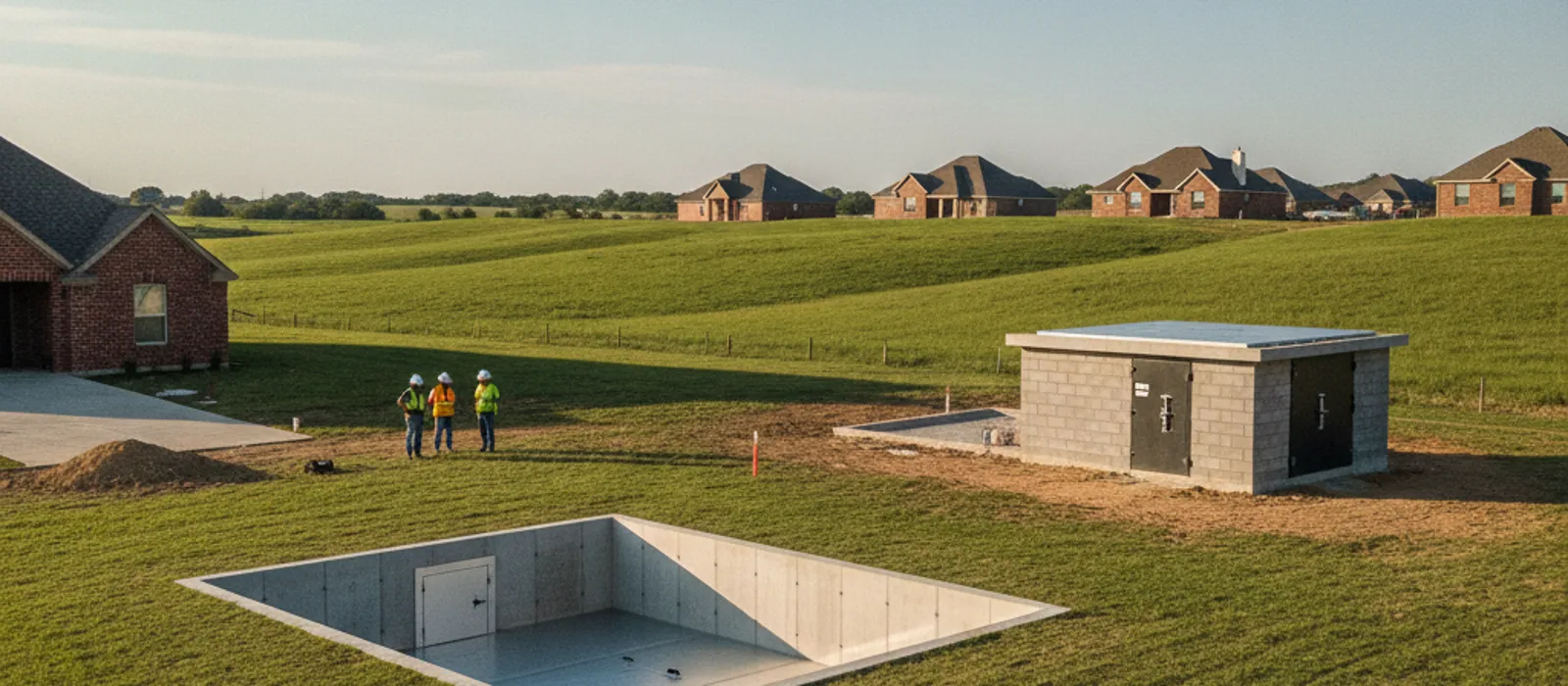
Living in North Texas means facing the very real threat of severe weather, including devastating tornadoes. Every year, families in Grayson, Fannin, and Cooke counties witness the destructive power of these storms. Protecting your loved ones starts with a certified storm shelter or safe room. Understanding the specific Grayson County storm shelter codes and how they apply to your home or business is not just a recommendation; it is a critical step in ensuring your shelter provides the life-saving protection it promises.
Building a storm shelter is a significant investment in safety. It requires adherence to stringent national standards, which local municipalities in Grayson County adopt and enforce. These regulations ensure that your shelter can withstand the extreme forces of a tornado, from high winds to projectile impacts. At Texoma Storm Shelters, we are your authoritative life-safety experts, guiding you through every code, standard, and installation detail. We provide free written estimates and are licensed and insured, offering peace of mind from start to finish. If you are ready to explore your options or have questions about local requirements, call us today at (903) 884-7210 for a transparent discussion.
The Imperative for Storm Shelters in Grayson County
Grayson County sits firmly within “Tornado Alley,” a region prone to frequent and powerful tornadic activity. Communities like Sherman, Denison, and Pottsboro have experienced firsthand the unpredictable nature of these storms. While weather forecasting has improved, the short warning times often leave little opportunity for residents to seek adequate protection if they do not have a designated safe space on their property.
A storm shelter is not merely a convenience; it is a robust structure designed to offer near-absolute protection during a tornado. It is a critical component of a comprehensive family emergency plan. Without a properly constructed and code-compliant shelter, residents are often forced to rely on less secure options, such as interior rooms or bathtubs, which offer limited defense against an EF4 or EF5 tornado. Investing in a certified storm shelter means investing in the highest level of safety available for your family or employees. It is about being prepared when seconds count, ensuring that when the sirens blare, you have a fortified refuge ready.
Understanding the Core Standards: FEMA P-320 and ICC 500
The foundation of all legitimate storm shelter and safe room construction in the United States, including those installed in Grayson County, rests on two key documents: FEMA P-320 and ICC 500. These are not merely suggestions; they are comprehensive guidelines developed by experts to ensure shelters can withstand the most severe tornado forces.
FEMA P-320, “Taking Shelter from the Storm: Building a Safe Room for Your Home or Small Business,” provides detailed guidance for homeowners and contractors on how to design and construct safe rooms. It covers everything from structural integrity to ventilation and anchoring systems. This document is specifically tailored for residential and small business applications, making it highly relevant for most homeowners in Sherman, Denison, and the surrounding areas looking to install a personal safe room.
ICC 500, “Standard for the Design and Construction of Storm Shelters,” is a more robust and legally enforceable standard. It is adopted into building codes nationwide and applies to both residential and commercial storm shelters. ICC 500 sets minimum requirements for the design, construction, and installation of storm shelters that provide protection from tornadoes and hurricanes. This includes specifications for wind loads, impact resistance from flying debris, anchorage, and occupant capacity. When a professional installer refers to a “FEMA-compliant” or “ICC-500 certified” shelter, they are indicating that the structure has been engineered and built to meet these rigorous, life-saving standards.
These standards are not interchangeable but complementary. FEMA P-320 serves as an excellent resource for understanding the principles, while ICC 500 provides the mandatory technical requirements that must be met for a shelter to be considered truly safe and code-compliant. Any storm shelter installed by Texoma Storm Shelters strictly adheres to these critical guidelines, ensuring your investment delivers reliable protection. You can learn more about these guidelines by visiting our blog post on FEMA P-320 storm shelter standards and ICC 500 safe room requirements.
Navigating Grayson County Storm Shelter Codes and Local Requirements
It is important to clarify that there is no single “Grayson County storm shelter code” document issued directly by the county for residential construction. Instead, cities and towns within Grayson County adopt national model building codes, primarily the International Residential Code (IRC) for homes and the International Building Code (IBC) for commercial structures. These adopted codes then reference and mandate compliance with ICC 500 for storm shelters and safe rooms.
For residents in unincorporated areas of Grayson County, the permit process for residential storm shelters is generally less formal than within city limits, but adherence to FEMA P-320 and ICC 500 standards remains paramount for safety. However, if you live within city limits such as Sherman, Denison, or Van Alstyne, you will almost certainly need to obtain a building permit from your city’s planning or building department before installing a storm shelter.
The permitting process ensures that your storm shelter installation meets structural integrity, setback requirements, and other local zoning ordinances. It is designed to protect both the homeowner and the community by verifying that the construction is safe and properly executed. Ignoring these local requirements can lead to fines, forced removal of the shelter, or issues with insurance claims. Texoma Storm Shelters is experienced in navigating these local permitting processes across Grayson County, ensuring your project meets all necessary Grayson County storm shelter codes and city regulations. We handle the paperwork and inspections so you can focus on securing your family’s safety.
Specific Design and Installation Requirements for Different Shelter Types
The specific requirements for your storm shelter will vary depending on its type and location. However, the underlying principle of meeting FEMA P-320 and ICC 500 standards remains constant.
Above-Ground Safe Rooms
Above-ground safe rooms are typically installed inside a garage, utility room, or even within an existing structure. These units must be anchored securely to a concrete slab foundation that can withstand the uplift and shear forces of a tornado. The walls, ceiling, and door must be constructed from materials certified to resist extreme wind pressure and projectile impacts, such as 2x4 lumber traveling at 100 mph. Ventilation systems must be designed to prevent air pressure differentials while maintaining a breathable environment. Proper ingress and egress, including an outward-swinging door, are also critical. Our above-ground safe rooms are engineered for maximum protection and ease of access.
Underground Storm Shelters
Underground storm shelters are buried beneath the ground, often in a backyard or garage. These shelters benefit from the earth’s natural insulation against wind and debris. Key requirements include robust structural design to resist soil pressure and buoyancy, proper waterproofing to prevent leaks, and secure anchoring to prevent flotation. Access hatches must be strong, impact-resistant, and seal tightly. Ventilation is also crucial to prevent carbon dioxide buildup and ensure fresh air. Drainage systems around the shelter are often necessary to manage groundwater. Explore our options for underground storm shelters designed for durability and safety.
Garage Floor Shelters
Garage floor shelters are a popular choice, installed flush with the garage floor. These shelters are a type of underground shelter but have specific considerations due to their location. The installation requires cutting and removing a section of the existing concrete slab, excavating the area, and then carefully installing and anchoring the shelter. The lid must be flush, strong enough to drive over, and capable of resisting impact. Proper drainage and ventilation are also vital. These shelters are ideal for convenience and space-saving. You can learn more about our garage floor shelters and their installation process.
Regardless of the type, every Texoma Storm Shelters installation in Grayson County adheres to these rigorous standards, ensuring your shelter is a true haven. We consider soil conditions, water tables, and local building codes specific to your property’s location, whether it is in Sherman, Gunter, or anywhere else in North Texas.
Real-World Investment: Cost, Rebates, and Compliance in Grayson County
Investing in a storm shelter is a significant decision, and understanding the costs, potential rebates, and the value of compliance is crucial. Here are some realistic examples from our work in Grayson County:
-
Sherman, TX - Above-Ground Safe Room: A family in Sherman opted for an 8x8 foot above-ground safe room installed in their garage. This unit, certified to ICC 500 standards, cost approximately $6,200. They were able to apply for a local rebate program, which, once approved, provided a $1,500 rebate, reducing their out-of-pocket expense to $4,700. The permit process with the City of Sherman building department was smooth, thanks to our team handling the submission. This family now has immediate, secure access during the spring tornado season.
-
Denison, TX - Underground Storm Shelter: A couple in Denison chose a 6x10 foot underground storm shelter for their backyard. This larger unit, perfect for their extended family, involved excavation and specific drainage considerations due to local soil conditions. The total installed cost was around $7,800. While no specific city rebates were available at the time, their investment in a FEMA P-320 compliant shelter gave them peace of mind, especially after a close call with a severe storm near Lake Texoma.
-
Pottsboro, TX - Garage Floor Shelter: A homeowner in Pottsboro needed a space-efficient solution and selected a 4x6 foot garage floor shelter. The installation, including concrete work and debris removal, amounted to approximately $4,500. This project did not require a city permit as the property was in an unincorporated area, but our installation still adhered strictly to ICC 500 standards for projectile and impact resistance. This shelter provided quick access and kept their garage functional.
These examples illustrate that costs vary based on size, type, and specific site conditions. However, the value of a compliant, professionally installed storm shelter is immeasurable when severe weather strikes. We provide clear, written estimates upfront, so you know exactly what to expect. For more detailed information on typical costs, visit our storm shelter cost guide.
Here is a general cost breakdown for common residential storm shelter types, excluding potential rebates or specific site challenges:
| Shelter Type | Average Size (Feet) | Typical Installation Cost Range | Key Compliance Factors |
|---|---|---|---|
| Above-Ground Safe Room | 6x8 to 8x10 | $5,500 - $8,500 | ICC 500 rated walls/door, secure anchoring, ventilation |
| Underground Storm Shelter | 6x8 to 8x12 | $7,000 - $10,000 | Structural integrity, waterproofing, proper ventilation |
| Garage Floor Shelter | 4x6 to 6x8 | $4,000 - $7,000 | Flush, impact-resistant lid, drainage, proper anchoring |
| Commercial Safe Room | Custom | $15,000+ | ICC 500, ADA compliance, capacity, fire rating (if applicable) |
Remember that these are estimates, and a free, personalized written estimate from Texoma Storm Shelters will provide the most accurate pricing for your specific needs and location in Grayson County. We can also help you understand potential storm shelter rebate applications that might be available.
The Permitting and Inspection Process for Your Grayson County Safe Room
When installing a storm shelter within an incorporated city in Grayson County, such as Sherman, Denison, Pottsboro, Whitesboro, Van Alstyne, or Gunter, you will likely need to follow a specific permitting and inspection process. This process ensures your shelter meets local building codes and safety standards.
- Application Submission: The first step involves submitting a building permit application to your city’s building department. This application typically includes detailed plans for the storm shelter, site plans showing its location on your property, and proof that the shelter design meets ICC 500 or FEMA P-320 standards. Texoma Storm Shelters handles all necessary documentation for your permit application.
- Plan Review: City officials will review the submitted plans to ensure compliance with local zoning ordinances, setback requirements, and adopted building codes. They verify that the shelter’s design and proposed installation method are safe and meet the required structural integrity for tornado protection.
- Permit Issuance: Once the plans are approved, the city issues a building permit. This permit must be prominently displayed at the installation site. Proceeding with installation without a permit can result in delays, fines, or even the requirement to remove the installed shelter.
- Inspections: Depending on the type of shelter and city requirements, there may be one or more inspections during the installation process. For underground shelters, a pre-pour inspection might be required to check excavation depth, anchoring, and rebar before concrete is poured. A final inspection verifies that the shelter is installed correctly, meets all code requirements, and is ready for use.
- Final Approval: Upon successful completion of all inspections, the city provides final approval, indicating that your storm shelter is officially compliant with local building codes.
Navigating these steps can seem complex, but Texoma Storm Shelters manages the entire permitting and inspection process for you. Our expertise ensures your storm shelter installation in Grayson County is seamless and fully compliant, giving you confidence in its safety and legality. We understand the nuances of local regulations, from Sherman to Van Alstyne, and make sure every detail is handled correctly. For more information on permits, see our article on storm shelter permits in Texas.
Choosing a Trusted Partner for Storm Shelter Installation in North Texas
When it comes to protecting your family or employees from severe weather, choosing the right storm shelter installer is as critical as the shelter itself. The integrity of your safe room depends entirely on its design, construction, and proper installation according to stringent safety standards like FEMA P-320 and ICC 500. Texoma Storm Shelters stands as your authoritative life-safety expert in Grayson County and throughout North Texas.
We are licensed and insured, providing a layer of protection for you and your property throughout the entire installation process. Our team is deeply familiar with the nuances of Grayson County storm shelter codes and the specific requirements of cities like Sherman, Denison, and Whitesboro. We do not cut corners; we prioritize safety and compliance above all else. From the initial consultation and free written estimate to the final inspection, we maintain transparent communication and adhere to the highest industry standards.
Our straightforward North Texas tone means you get practical, reassuring advice without any jargon. We explain what you need to know about different shelter types, their benefits, and how they meet or exceed national safety criteria. We also offer an emergency line for severe weather and storm shelter installation, demonstrating our commitment to your safety around the clock. Do not compromise on safety. Choose a partner who understands the local landscape, the federal guidelines, and your need for dependable protection.
For a reliable, code-compliant storm shelter installation in Grayson County, contact Texoma Storm Shelters today. You can reach us directly at (903) 884-7210, or email us at info@texomatornadoshelters.com to schedule your free, no-obligation estimate. Let us help you secure your peace of mind with a safe room built to last.
Frequently Asked Questions
### What is the primary difference between FEMA P-320 and ICC 500?
FEMA P-320 is a comprehensive guidance document for homeowners and small businesses, providing design and construction recommendations for safe rooms. ICC 500, on the other hand, is a legally enforceable standard adopted into building codes, setting minimum requirements for the design, construction, and installation of storm shelters for both residential and commercial use. While FEMA P-320 offers best practices, ICC 500 provides the mandatory technical specifications that must be met for a shelter to be considered code-compliant.
### Do I need a permit to install a storm shelter in Grayson County?
If you reside within the incorporated limits of a city or town in Grayson County, such as Sherman, Denison, or Van Alstyne, you will almost certainly need a building permit from your local city’s building department. For properties in unincorporated areas of Grayson County, residential storm shelters may not require a county-level permit, but adhering to ICC 500 and FEMA P-320 standards is still crucial for safety and structural integrity. Texoma Storm Shelters assists with navigating these local permitting requirements.
### How long does it take to install a typical residential storm shelter?
The installation time for a residential storm shelter varies depending on the type and complexity. An above-ground safe room in a garage can often be installed in a single day. Underground or garage floor shelters, which require excavation and concrete work, typically take 1 to 3 days from start to finish. This timeframe includes site preparation, installation, and cleanup, assuming no unexpected site challenges arise.
### Are there any rebates or financial assistance programs for storm shelters in Grayson County?
Some municipalities or state programs occasionally offer rebates or grants for storm shelter installation, often on a first-come, first-served basis. These programs can vary yearly and may have specific eligibility criteria. Texoma Storm Shelters stays informed about available programs and can guide you on potential opportunities, such as the occasional statewide FEMA Hazard Mitigation Grant Program, which some Grayson County residents might qualify for. We recommend checking with your specific city or local emergency management office for current programs, and we can discuss any known rebate possibilities during your free estimate.